Heat styling is a trade, not a sin. A blow dryer, a flat iron, and a curling iron all reshape hair by using heat to reset the bonds that hold its pattern, and every pass costs the strand a little strength. The goal in Lowell, as anywhere, is not zero heat. It is a fair exchange rate: the style you want, bought with the least heat your hair will accept. That rate is set by four things you control completely — dryness, protection, temperature, and passes — and this guide walks them in the order you would actually use them.
Everything below is the home half of the work. The salon half is honest assessment: a stylist can show you which sections of your hair are already heat-tired, because those sections set your real limits.
The routine, in working order
- Start from clean, conditioned hair. Heat on top of old product and buildup bakes residue onto the strand and dulls it. Styling on wash day, or on hair that was protected and slept on carefully, always goes better than rescuing third-day hair with a hotter iron.
- Get the hair most of the way dry before any styling heat. Rough-dry with the dryer until the hair is just damp, or let it air-dry to that point. The less water the styling pass has to drive out, the less time the heat spends on the hair.
- Apply heat protectant section by section. A quick mist over the finished top layer leaves the underlayers bare, and the underlayers are where irons spend their time. Work in the same sections you will style, and comb the product through so it coats rather than spots.
- Set the temperature to your hair, not the tool's maximum. Fine, lightened, or already-damaged hair belongs at the lower settings. Medium hair styles in the middle. Only thick, coarse, resistant hair routinely needs the upper range. If the lowest setting that works is lower than you have been using, your hair has been overpaying for every style.
- Dry fully before an iron ever touches the hair. A flat iron or curling iron on damp hair flashes the remaining water to steam inside the strand, which can crack it from within. If you hear a sizzle, stop, dry the section, and start again.
- Take slow, single passes and let them count. One steady pass that does the job beats four quick ones. Each reheat of the same strand adds damage without adding style, so work in small sections and move on once a section is done.
- Let the hair cool in its new shape before touching it. Hair sets as it cools, the way it was reshaped while hot. Brushing curls out while they are still warm undoes the set and invites a second round of heat to fix it.
Reading your hair's damage signals
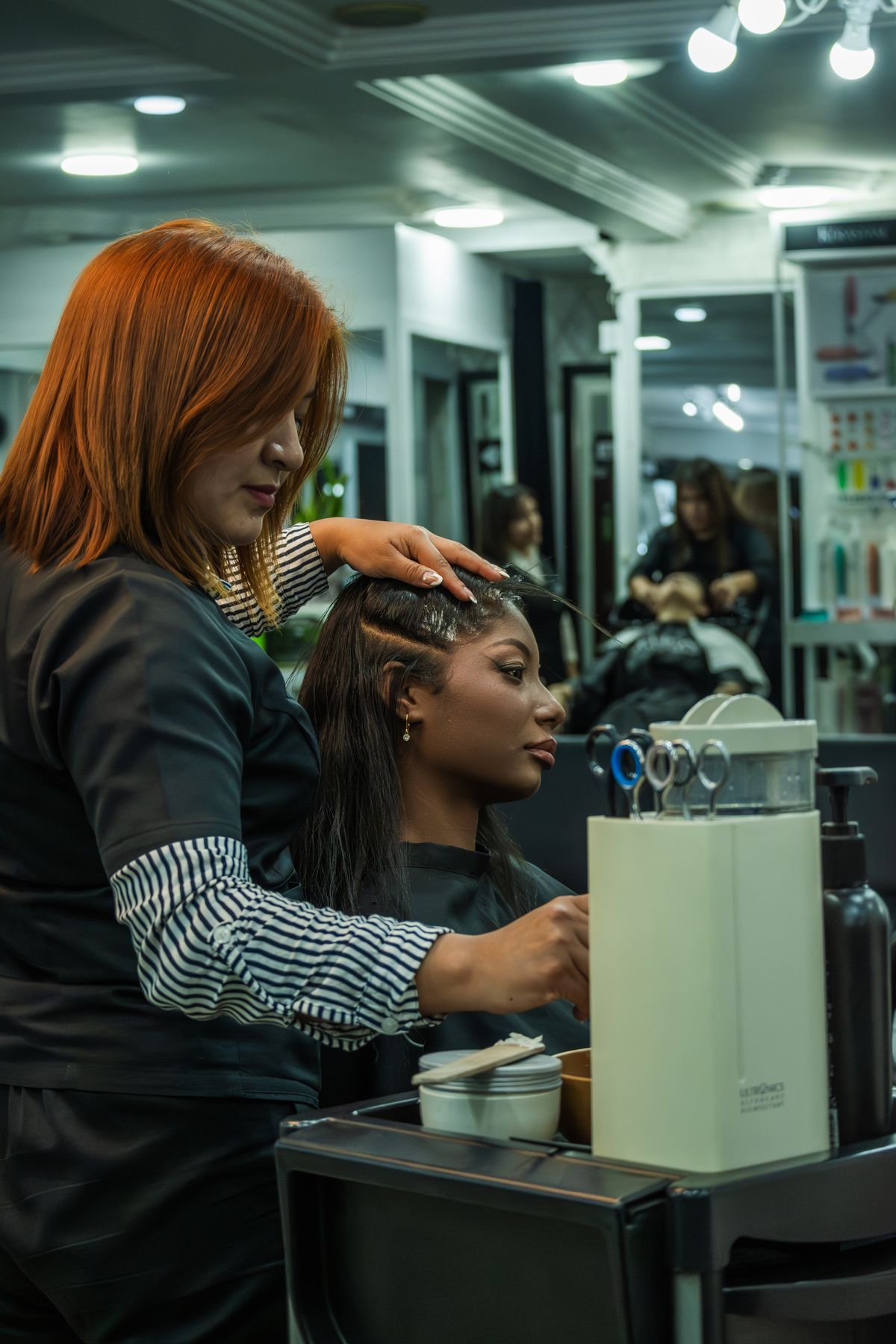
Hair reports its heat history plainly if you look. Curls that no longer spring back, front sections that break shorter than the rest, ends that stay rough while the mid-lengths smooth out, and hair that feels limp or slightly gummy when wet are all reports of accumulated heat or chemical stress. When those signs show up, the answer is not a better product at the same routine; it is less heat, lower heat, or a trim of the sections that have stopped responding. Products improve feel. They do not restore a strand's structure.
Where the professional line falls
Home styling done with the steps above is safe ground for healthy hair. The line is damage assessment and rescue: if sections feel gummy wet, snap with gentle stretching, or refuse to hold any style, have a stylist evaluate before your next round of heat, because fragile hair can cross from stressed to breaking in a single aggressive session. At The Ivy Salon, that check takes a moment during any appointment and can save the front sections, which are always the first casualties.
Common questions
What temperature should I actually use?
The lowest one that styles your hair in one or two passes. Fine or lightened hair usually belongs at low settings, medium hair in the middle range, and only thick, resistant hair near the top of the dial.
Does heat protectant let me use higher temperatures?
No. Protectant reduces and evens out the damage at a given temperature; it does not raise the safe ceiling. Treat it as insurance on a sensible setting, not permission for the maximum.
Is blow-drying every wash day too much?
For most hair, a blow dryer on moderate heat, kept moving and held a few inches away, is the gentlest styling heat there is. It is direct-contact irons at high settings, used daily, that accumulate damage fastest.
Photos in this guide are representative stock images.
← All guides from The Ivy Salon← Back to The Ivy Salon